
YouTube is making a major change to its monetization program that could make it significantly harder for new creators to start earning advertising revenue. Beginning February 1, 2027, creators attempting to qualify for the main YouTube Partner Program advertising tier will face much higher watch-time and Shorts-view requirements.
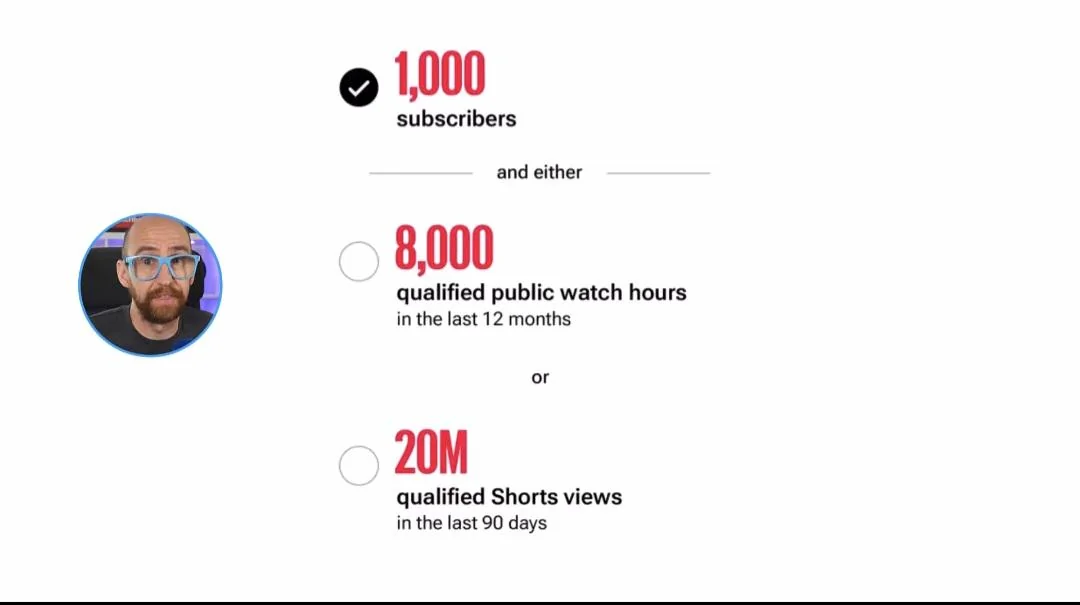
Under the new requirements, creators will still need at least 1,000 subscribers, but the amount of watch time required will double. Instead of the previous requirement of 4,000 qualified public watch hours within a 12-month period, new creators will need 8,000 qualified watch hours. Creators who attempt to qualify through YouTube Shorts will also face a higher threshold, increasing from 10 million qualified Shorts views within 90 days to 20 million.
The change represents a significant increase in the amount of engagement a new YouTube channel will need before it can begin generating advertising revenue. Reaching 4,000 watch hours was already one of the biggest challenges for smaller creators. Increasing that number to 8,000 hours means creators will need to generate approximately 480,000 minutes of qualified viewing time within a year.
For perspective, if viewers watch an average of 10 minutes of a creator's videos, approximately 48,000 viewing sessions would be required to generate 8,000 hours of watch time. If viewers watch an average of only five minutes, that number increases to roughly 96,000 viewing sessions. This makes audience retention increasingly important because creators will need viewers to do more than simply click their videos. They will need people to stay and watch.
The Shorts requirement could be even more difficult for smaller channels. Generating 20 million qualified Shorts views within 90 days works out to approximately 6.67 million views per month, or more than 220,000 views every day. While Shorts can generate enormous audiences when a video goes viral, consistently reaching those numbers could be challenging for creators without an established following.
Existing creators who are already members of the YouTube Partner Program will not suddenly have to reach 8,000 watch hours again when the new entry requirements take effect. The higher threshold primarily affects creators attempting to qualify for the program after the changes begin. However, YouTube is also placing more emphasis on creators maintaining an active presence on the platform, meaning established creators should continue publishing and generating meaningful audience activity.
The new YouTube monetization requirements could have the biggest impact on small and independent creators. Gaming channels, musicians, producers, commentators, podcasters, tutorial creators, reviewers and other niche channels may have strong audiences without generating millions of views. For these creators, reaching 8,000 watch hours could extend the amount of time it takes before a channel begins earning advertising revenue.
At the same time, the changes could make long-form YouTube videos increasingly valuable. Twenty million Shorts views in three months is an enormous target, while 8,000 watch hours may be more achievable for creators who produce longer videos that keep viewers engaged. A 15-, 20- or 30-minute video with strong audience retention can generate substantially more watch time than extremely short content.
That means creators may need to think differently about YouTube growth. Getting views will remain important, but keeping viewers watching could become even more valuable. A video that receives 30,000 views with an average watch duration of 10 minutes can produce considerably more useful watch time than a video that receives 100,000 views but loses most viewers within the first few seconds.
Metrics such as audience retention, average view duration, click-through rate and returning viewers will therefore become increasingly important for channels working toward monetization. Titles and thumbnails can attract the initial click, but the video itself has to keep the audience interested. Creators who consistently produce videos that viewers watch for longer periods will have a major advantage when attempting to reach the new 8,000-hour requirement.
Creators also have time to prepare. The new requirements are scheduled to begin February 1, 2027, which gives channels approaching monetization an opportunity to continue building their audiences before the higher threshold takes effect. For newer creators, developing a catalog of evergreen videos could become one of the strongest strategies. Videos that continue receiving search traffic and recommendations months after publication can steadily generate watch time instead of forcing creators to depend entirely on viral hits.
The changes also reinforce YouTube's evolution from a simple video-sharing website into one of the world's largest entertainment platforms. YouTube says viewers now watch more than one billion hours of content on televisions every day, while Shorts generate hundreds of billions of daily views. As competition for attention increases, YouTube appears to be raising the standards creators must meet before gaining access to its advertising revenue-sharing ecosystem.
For aspiring creators, the message is clear: building a monetized YouTube channel is becoming more demanding. Starting in 2027, reaching 1,000 subscribers will only be part of the challenge. Creators pursuing long-form monetization will need 8,000 qualified watch hours, while Shorts-focused channels could need 20 million qualified views within 90 days.
YouTube still offers enormous opportunities for independent creators, but the barrier to earning advertising revenue is getting higher. Channels that focus on strong videos, better audience retention, searchable topics, compelling thumbnails and consistent publishing will have a better chance of reaching the new requirements. For creators planning to build a YouTube business, 8,000 watch hours could soon become one of the most important milestones they have to reach.